
Postpartum Hair Changes: What's Normal and What a Stylist Can Help With
Why Is My Hair Falling Out After Baby?
Postpartum hair shedding is one of the most common and least talked-about changes that happen to a woman's body after giving birth. It typically begins between two and four months postpartum, peaks around the four-to-six month mark, and resolves on its own by the time the baby's first birthday arrives for most women. The shedding is caused by a hormonal shift rather than a problem with the hair itself, which means it is temporary in the vast majority of cases. This guide explains what is happening, what is normal, when it is worth calling a doctor, and what a stylist can genuinely help with during the transition.
What Is Actually Happening to Your Hair
What Pregnancy Does to the Hair Cycle
Hair grows in cycles. There is a growth phase that lasts several years, a transitional phase, and a resting phase that ends with shedding. Under normal circumstances, about ten to fifteen percent of the hair on the head is in the resting and shedding phase at any given time, which is why a certain amount of daily hair loss is completely normal.
During pregnancy, elevated estrogen levels extend the growth phase and keep far more hair than usual in that active growing state. The result is the thick, full, sometimes glossy hair that many women experience during their second and third trimesters. The hair is not actually growing faster. Less of it is shedding. Those strands that would normally cycle into the resting phase are being held in the growth phase by the hormonal environment of pregnancy.
What Happens After Birth
When estrogen levels drop after delivery, all of the hair that was being held in the extended growth phase is released simultaneously into the resting phase. Within two to four months, that hair begins to shed. What feels like a dramatic and frightening amount of hair loss is actually the shedding that was deferred during nine months of pregnancy, arriving all at once.
This process has a name. It is called telogen effluvium. It is not a disease, it is not a sign that something is wrong, and it is not permanent in the way that androgenetic hair loss can be. It is a timed hormonal response that the body goes through and then recovers from on its own.
When It Starts and How Long It Lasts
Most women begin to notice increased shedding between two and four months after giving birth. The peak of shedding typically falls around the four-to-six month postpartum mark, and for many women this is the point where the shower drain, the hairbrush, and the baby's tiny hands all seem to be collecting alarming quantities of hair at the same time.
For most women, shedding begins to slow noticeably by six months and has largely resolved by twelve months postpartum. This timeline varies by individual and can be affected by breastfeeding, thyroid function, nutritional status, and stress. It can feel like a very long time when it is happening, but the trajectory for the majority of women is toward full or near-full recovery.
What Postpartum Hair Loss Actually Looks and Feels Like
The Shedding
The amount of hair that comes out during peak postpartum shedding can be genuinely alarming. Handfuls in the shower. Strands on the baby's clothes. Hair wrapping around everything. Women who were not warned that this was coming sometimes think they are experiencing something catastrophic when they are actually going through a process that is happening to a very large number of new mothers at the same time.
What makes it feel more dramatic than it often looks is the contrast with pregnancy. Hair that was unusually full and dense for nine months suddenly feels thin. That perceived loss is partly the actual shedding and partly the comparison to a baseline that was artificially elevated during pregnancy. The before-pregnancy version of your hair is the realistic endpoint, not the during-pregnancy version.
The Texture Changes
Alongside shedding, many women notice that the texture of their hair changes postpartum. Hair that was straight before pregnancy sometimes comes in with a wave or curl. Hair that was wavy can become straighter. The texture shifts are also hormonal in origin and can affect how the hair behaves for months or even years after birth.
This is worth knowing before sitting down in a stylist's chair and asking for the same cut that worked before, because the same cut on a changed texture can produce a completely different result. The postpartum period is often a good time to have a real consultation about what the hair is actually doing now rather than working from a pre-pregnancy reference point.
The Regrowth
One of the most identifiable signs of postpartum shedding in the months following its peak is the halo of short regrowth that frames the hairline, particularly around the temples and the front of the scalp. These short pieces grow in at different rates and can look frizzy or flyaway before they are long enough to blend into the rest of the hair.
The regrowth itself is a good sign. It means the follicle is active and the cycle is resetting. Managing how it looks while it grows in is one of the specific areas where a stylist can genuinely help, through cut and color choices that make those pieces less obvious and more integrated into the overall style.
When to Talk to Your Doctor Rather Than Your Stylist
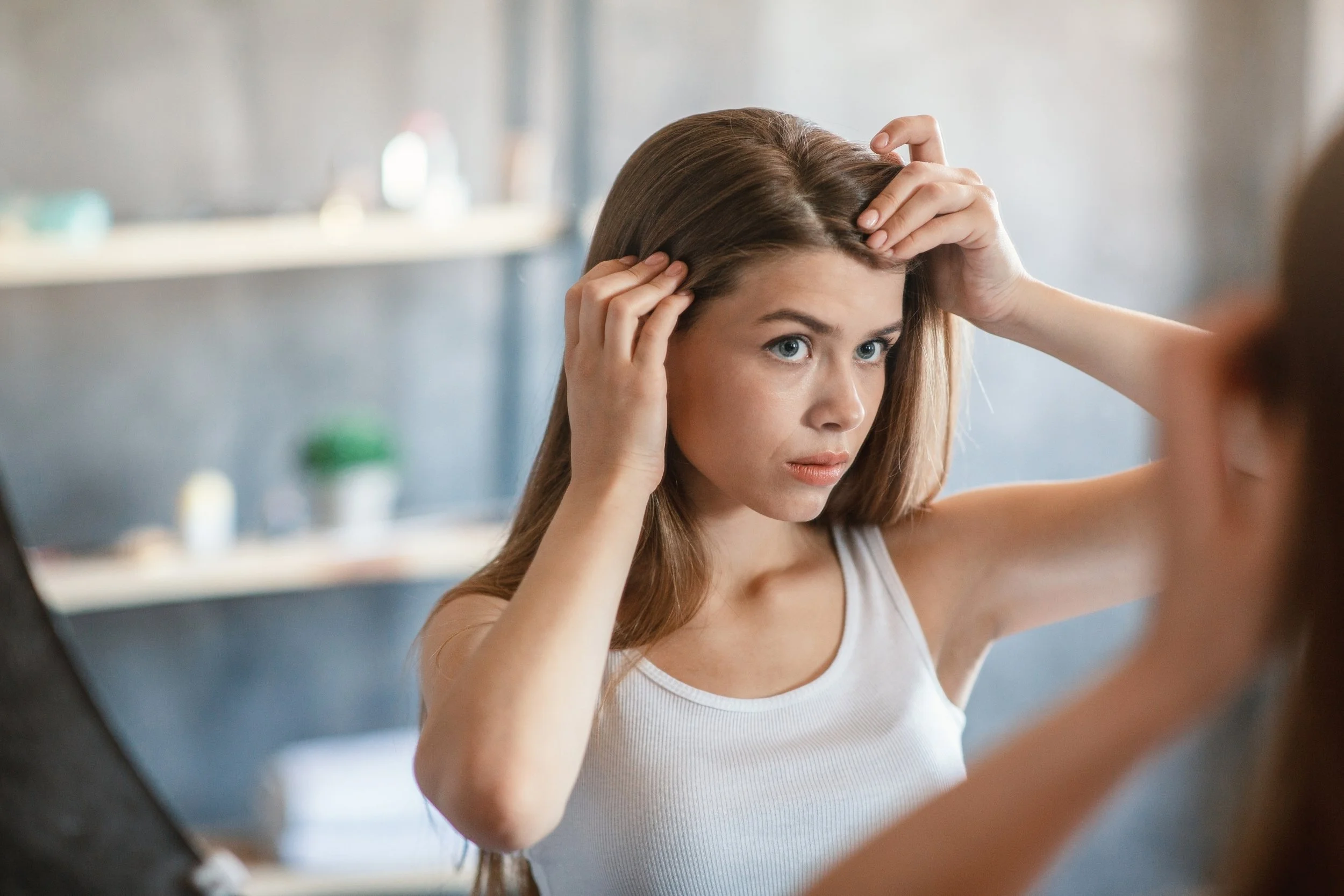
Most postpartum hair shedding is normal and self-resolving. There are situations, though, where the hair loss warrants a conversation with a doctor rather than or in addition to a salon visit.
If shedding is still significant past the twelve-month mark, it is worth getting a blood panel to check thyroid function, iron levels, ferritin, and vitamin D. Postpartum thyroid dysfunction affects a meaningful percentage of women after birth and can cause hair loss that does not resolve on the same timeline as standard telogen effluvium. Iron deficiency, which is common after birth, also contributes to hair loss and is entirely correctable once identified.
If the hair loss is concentrated in a specific pattern, such as a receding hairline along the temples or diffuse thinning across the crown, rather than general all-over shedding, that is also worth discussing with a doctor. Postpartum androgenetic hair loss is a separate condition from telogen effluvium and has different treatment pathways. A stylist can help with both cosmetically, but the underlying cause is worth understanding before deciding how to manage it.
None of this is meant to create alarm. The overwhelming majority of postpartum hair loss is temporary, hormonal, and self-resolving. But if something feels wrong beyond what is described here, or if the timeline is stretching well past a year, medical guidance is the right first step before any cosmetic intervention.
What a Stylist Can Actually Help With
A Haircut That Works With Less Density
This is often the most immediately helpful thing a stylist can do during the postpartum period. A cut designed for the hair's pre-pregnancy density may not work the same way on hair that has lost volume. Styles that relied on fullness to hold their shape can start to look flat or limp when that fullness is temporarily reduced.
A skilled stylist can rework the cut to work with the current density rather than the remembered one. This might mean a shorter length that has more visible body, layers placed to create the appearance of thickness rather than to remove it, or a shape that does not depend on volume to look intentional. The goal is a cut that looks right for where the hair is right now, with a plan for how it adapts as the density returns. Every haircut appointment at Ergun Tercan Salon includes a real consultation where the current condition of the hair, not its history, drives the decisions.
Color That Creates the Illusion of Fullness
Color is one of the most underused tools for managing the appearance of postpartum hair loss. The right color approach can significantly change how full the hair appears, even when the actual density has not yet recovered.
Highlights and lowlights create dimension that makes flat, thin-looking hair appear to have more depth and movement. Balayage in particular, with its graduated variation from root to tip, creates a visual complexity that reads as fuller hair even when the strand count is temporarily reduced. A flat, single-process color in a shade close to the scalp color makes the scalp more visible through the hair and can make thinning appear more pronounced. A colorist who understands this uses contrast and dimension deliberately to work in the client's favor.
Color appointments can also be an opportunity to address the regrowth halo at the hairline. Soft, blended color through that area can make the shorter pieces read as part of the overall color story rather than as a visible sign of shedding. If you have also started to notice more gray appearing during the postpartum period, which is not uncommon, the guide on gray blending vs full coverage covers the options available for managing that without committing to a high-maintenance color schedule during an already demanding season of life.
Extensions for Volume During the Transition
Hair extensions are worth considering for postpartum clients who are past the breastfeeding period and want a more immediate solution to the volume and density loss. Extensions add fullness that the natural hair is temporarily not providing, and they can be a genuinely meaningful confidence restorer during a period when many women are already navigating significant changes in their sense of self.
The timing and method of postpartum extensions requires a careful consultation. The hair needs to be stable enough to support the attachment points before extensions are appropriate, and the method chosen should be the lightest possible for a scalp that may still be more sensitive than usual. Tape-in extensions and hand-tied wefts are generally the most appropriate options for postpartum clients because both methods distribute weight broadly rather than concentrating it at individual points. The extensions for fine and thinning hair guide covers the specific considerations for applying extensions to lower-density hair in more detail.
What to Avoid During This Period
Tight hairstyles that pull at the hairline are worth avoiding during the postpartum shedding period. Tension on follicles that are already in a vulnerable phase can prolong recovery or cause additional loss, particularly at the temples where postpartum shedding tends to be most visible.
Excessive heat styling daily adds mechanical stress to hair that is already more fragile than usual. A lower temperature setting and a heat protectant make a meaningful difference during this period compared to no protection at all. Overwashing is also worth addressing during postpartum. The instinct to wash more frequently when hair is shedding is understandable but counterproductive. Washing strips the hair of the oils that support the scalp environment, and more wash cycles mean more manipulation and more shedding during the washing process itself. The guide on overwashing covers practical strategies for reducing wash frequency that are realistic for the lifestyle of a new parent.
Keratin smoothing treatments are not recommended during the breastfeeding period. This is consistent with standard professional guidance across the industry and is worth knowing if the treatment has been on your mind as a way to manage postpartum texture changes. Once breastfeeding has concluded, the treatment can absolutely be revisited as part of a longer-term plan for getting the hair back to a baseline that feels manageable.
How to Talk to Your Stylist About What Is Happening
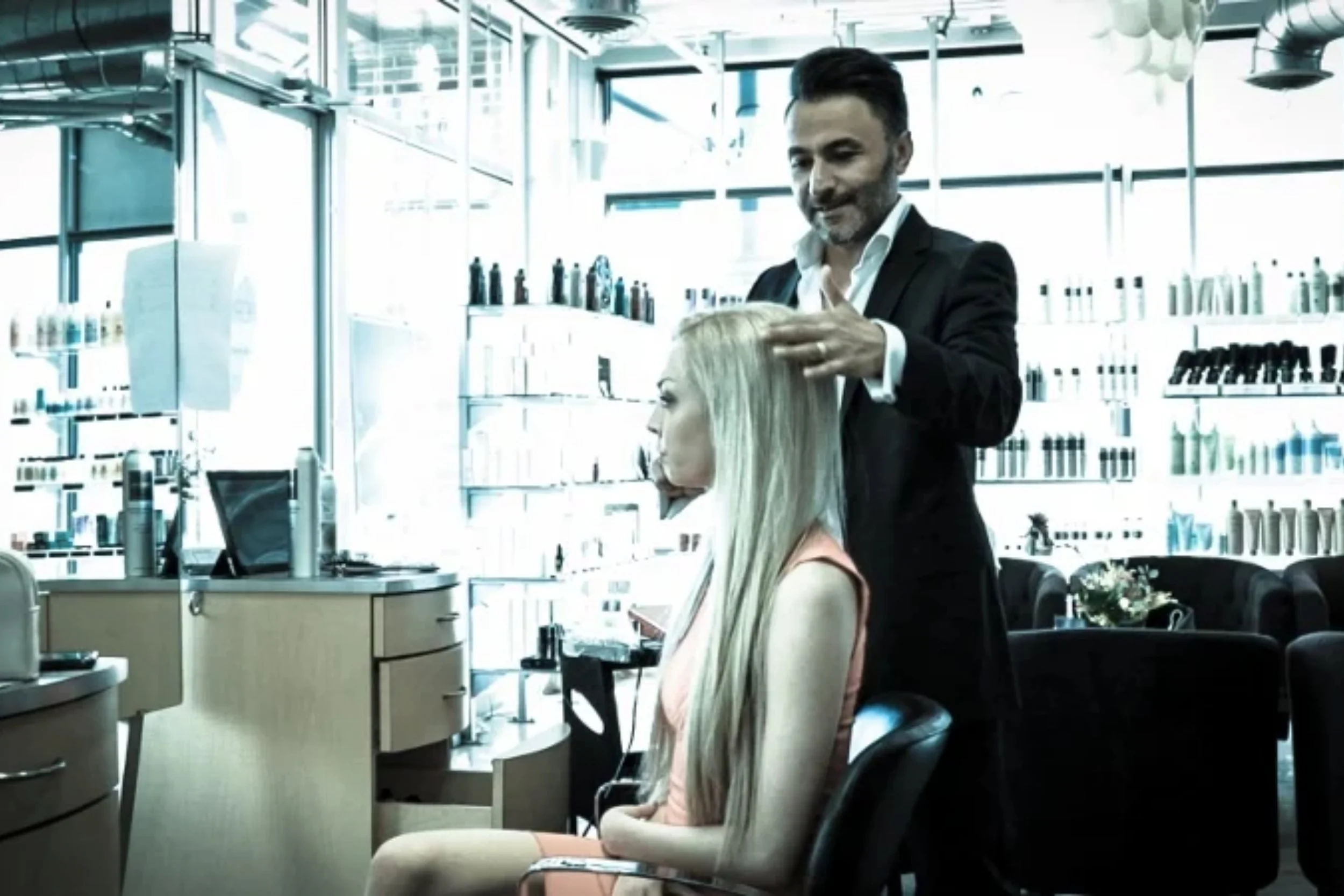
This is a conversation that more clients hesitate to have than it might seem. There is sometimes a feeling of embarrassment about postpartum hair changes, or a worry that bringing it up will make the appointment heavier than it needs to be. It is worth naming directly: your stylist needs to know what is happening with your hair to make good decisions about it. This is not an overshare. It is clinical information that changes the approach.
Tell them when the shedding started, where it is most concentrated, and whether the texture has changed since before pregnancy. Tell them what you are hoping to walk out with, both in terms of the immediate result and in terms of how the cut or color should adapt as the hair recovers. Tell them whether you are still breastfeeding, because that affects which services are appropriate.
A stylist who is experienced with postpartum hair will not need the conversation to be uncomfortable. They will have had it before, they will take the information seriously, and they will use it to make decisions that serve where your hair actually is rather than where it used to be. Our team at Ergun Tercan Salon is familiar with navigating postpartum hair changes across all textures and density types, and the consultation is where that conversation belongs.
How Denver's Dry Climate Makes This Period More Challenging
Denver's low humidity and high altitude already create a challenging environment for hair. During postpartum shedding, those conditions compound the situation in a few specific ways worth knowing.
The dry air pulls moisture from strands that are already more fragile than usual, which makes postpartum hair more prone to breakage at the shaft rather than shedding at the root. This can make the overall hair loss appear more dramatic than it actually is, because breakage mid-shaft creates short, flyaway pieces that add to the visual impression of thinning even when the actual follicle is not affected.
The regrowth halo that appears as the hair cycle resets also tends to frizz more visibly in dry conditions, making it harder to manage and more apparent against the scalp. A lightweight, hydrating leave-in conditioner applied specifically to the hairline area can help the regrowth lie flatter and look more integrated into the rest of the hair without weighing down the roots.
If you have been noticing your hair taking longer to recover than friends in other cities, Denver's climate is a genuine contributing factor and worth mentioning at your next appointment. Understanding the environment your hair is operating in helps a stylist make recommendations that account for where you actually live rather than a generic national average.
It Gets Better. And You Can Get Help While It Does
Postpartum hair loss is one of those experiences that is almost universally underestimated before it happens and overestimated in how permanent it feels while it is happening. For the majority of women, the hair comes back. The timeline is longer than anyone would choose, but the destination is recovery.
What a stylist can offer during that timeline is not a cure. It is a set of practical, honest tools for feeling better about your hair while the biology does its own work at its own pace. A cut that works with less density. Color that restores dimension. An extension option that adds the volume that has temporarily left. And a conversation with someone who has seen this before and can tell you clearly and without drama that you are going to be fine.
When you are ready for that conversation, book an appointment at Ergun Tercan Salon in Denver. Come in with your hair as it is right now, not as it was. That is the version we can work with.
Frequently Asked Questions About Postpartum Hair Changes
Is postpartum hair loss normal?
Yes. Postpartum hair shedding is one of the most common physical changes that occur after giving birth and is experienced by a very large percentage of new mothers. It is caused by a hormonal shift after delivery rather than a problem with the hair or scalp, and it is temporary in the overwhelming majority of cases. Most women see significant improvement by six months postpartum and full or near-full recovery by twelve months.
When does postpartum hair loss start and when does it stop?
Most women begin to notice increased shedding between two and four months after giving birth. The peak of shedding typically falls around the four-to-six month mark. Shedding usually begins to slow noticeably around six months and has largely resolved by twelve months postpartum. This timeline varies by individual and can be affected by breastfeeding duration, thyroid function, nutritional status, and stress levels.
How much postpartum hair loss is too much?
The amount of shedding during the postpartum period can feel alarming because it often happens all at once after months of reduced shedding during pregnancy. In most cases, what feels like too much is actually within the normal range for this hormonal transition. The situation that warrants a doctor's attention is shedding that is concentrated in a specific pattern rather than general all-over loss, shedding that continues significantly past the twelve-month mark, or shedding accompanied by other symptoms like fatigue or changes in skin or nails that might suggest a thyroid or nutritional issue.
Can a haircut help with postpartum hair loss?
Yes, in a meaningful practical way. A cut designed for pre-pregnancy density may not hold its shape or look right when that density has temporarily reduced. A stylist who understands postpartum hair can rework the cut to suit the current density, create the appearance of thickness through layer placement and weight management, and design a shape that adapts gracefully as the density returns. This will not stop the shedding, but it can significantly change how the hair looks and how manageable it is day to day during the transition.
What hair color is best for postpartum hair loss?
Color approaches that create dimension and contrast generally work best for hair that has temporarily lost density. Highlights and lowlights add visual depth that makes the hair appear fuller. Balayage creates graduated variation that reads as thickness even when strand count is reduced. Flat, single-process color in a shade close to the scalp makes the scalp more visible through the hair and can make thinning appear more pronounced. A colorist who understands this dynamic can use contrast deliberately to work in your favor during the postpartum period.
Can I get hair extensions after having a baby?
In many cases yes, though timing and method matter significantly. The hair should be stable enough to support attachment points before extensions are appropriate, and the lightest possible method should be chosen to avoid adding stress to a scalp that may still be more sensitive than usual. The postpartum breastfeeding period is also worth discussing with your stylist, as some chemical services are best postponed until after breastfeeding has concluded. A thorough consultation that covers the hair's current condition, the timing relative to birth and breastfeeding, and the appropriate extension method is the right starting point.
Does postpartum hair grow back the same texture?
Not always, and this surprises many women. The hormonal environment of pregnancy and the postpartum period can alter the texture of the hair that grows back in, sometimes meaningfully. Hair that was straight before pregnancy can return with a wave or curl. Hair that was wavy can come back straighter. These texture changes can be temporary or can persist for a significant period. If the hair that grows back behaves differently from what you are used to, a consultation with a stylist to discuss a cut and approach calibrated to the current texture rather than the previous one is a practical and useful starting point.
Related Reads
If This Got You Thinking, These Are Worth Reading Next