
How to Get a Haircut That Works With Your Actual Hair Texture
Getting a haircut that works with your texture starts before the scissors come out. It starts with knowing what your hair actually does when it dries without product or heat, and communicating that to your stylist before anything is decided.
The most common reason haircuts stop working within a week is a mismatch between the cut and the texture, not a problem with the hair itself. This guide covers what to ask for, what to avoid, and how to have the consultation that gets you the right result whether your hair is curly, wavy, fine, or thick, including what Denver's dry climate specifically does to each texture between appointments.
Why Most Haircuts Stop Working After the First Week
Most haircut disappointments follow the same pattern. The cut looks right in the salon, sometimes even great, and then falls apart at home within a few days. The explanation most people land on is that they cannot style it the way the stylist did. That is occasionally true. More often, the real explanation is that the cut was not built for the hair's natural texture in the first place.
A cut designed for straight hair placed on wavy hair will expand and lose its shape without heat styling to flatten it. A cut designed for thick hair placed on fine hair will look limp rather than light. These are not styling failures. They are fit failures, and they are correctable at the consultation level if texture is part of the conversation from the beginning.
The other pattern worth naming is that the client arrives with styled hair, the stylist cuts based on what they see, and nobody discusses what the hair actually does naturally. The stylist cuts for the styled version. The client lives with the natural version. The gap between those two things is where most haircut problems begin.
The First Step: Understanding What Your Hair Actually Is
How to Read Your Real Texture
True texture is what your hair does the first time it dries completely after washing, with no product, no heat, and no manipulation. Not what it looks like after a diffuser. Not what it does on day two or three. What it does completely on its own the first time it dries.
If you have been blow drying or straightening your hair daily for years, it is worth washing it one morning and leaving it entirely alone until it dries to see what you are actually working with. A significant number of people who have been managing their hair as straight discover it is genuinely wavy when left alone. A number who identify as curly discover their pattern is looser or more irregular than their styling routine was suggesting.
Why This Changes Everything About Your Cut
A stylist who sees your hair styled cannot make fully informed decisions about how to cut it. They are looking at a version of your hair that may behave nothing like the version you live with every day. Arriving at a haircut appointment with your hair in its natural state, or being able to describe accurately what it does when it dries, is the single most useful thing you can bring to a consultation.
If you come in styled, tell your stylist before the cut begins. Most experienced stylists will wet a small section to see how the hair naturally behaves before deciding on an approach. This is not a delay. It is the part of the consultation that determines whether the cut works.
How to Get the Right Haircut for Curly Hair
What to Ask For
Ask your stylist specifically whether they are comfortable cutting curly hair dry. Curly hair shrinks significantly as it dries, sometimes by several inches depending on the tightness of the pattern. Decisions made on wet hair do not reflect what the hair will actually do once it is dry. A dry cut allows the stylist to see exactly where each curl falls, where the weight sits, and how the curls interact with each other in their natural state.
Ask for layering that removes weight rather than simply adds texture. Curly hair that is not layered tends to expand outward and form a triangle, heavier and wider at the bottom than at the crown. Removing weight through the right layer placement allows the curls to spring and move. The placement matters significantly, and a stylist experienced with curl patterns will layer with the natural fall line of the curl in mind rather than applying a standard layer pattern designed for straight hair.
What to Avoid
Avoid blunt one-length cuts if your hair has any significant curl or wave. Without weight removal, curly hair expands rather than falls into a shape. The tighter the curl pattern, the more pronounced this effect becomes and the more dramatically the shape suffers without layering.
Avoid razoring and heavy texturizing shears on curly hair. These tools cut across the hair shaft rather than through it cleanly, creating rough edges that frizz rather than form defined curl. Also worth avoiding is any stylist who rough-dries curly hair with a towel and then cuts immediately. The curl pattern tells you almost nothing when it has been disrupted that way.
What to Tell Your Stylist About Your Pattern
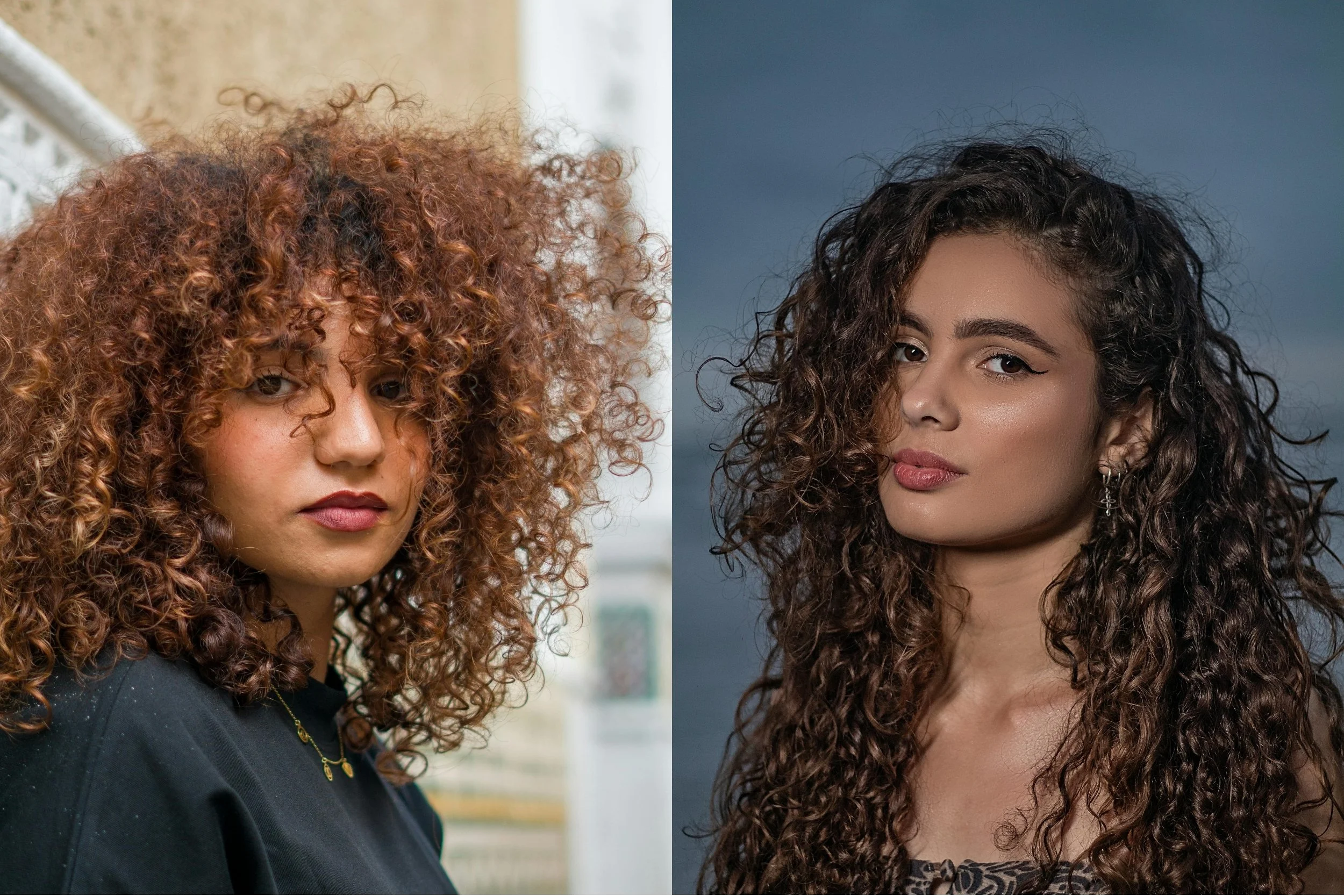
Tell them where your curls are tightest and where they are loosest, because most people do not have uniform curl throughout the head. Tell them where frizz tends to concentrate. Tell them whether your curls clump together or whether individual strands separate when they dry. Each of these pieces of information changes how the stylist approaches weight distribution and layering.
How to Get the Right Haircut for Wavy Hair
What Makes Wavy Hair the Most Commonly Miscut Texture
Wavy hair sits between two categories and most cutting systems are not built specifically for it. It is not straight enough to behave predictably with straight-hair technique and not curly enough to benefit from curl-specific approaches. The result is that wavy hair clients often receive cuts that look acceptable blown out and unpredictable air dried.
The second problem is that wavy hair is frequently invisible during the consultation because clients with wavy hair often arrive with it straightened or blown out. A stylist making decisions without ever seeing the wave pattern is essentially guessing at what the hair will do after the client leaves the salon.
What to Ask For
Ask for layering through the mid-lengths that allows the wave to move without being weighed down. Heavy, unrelieved weight at the perimeter causes wavy hair to flatten under its own mass and lose its wave pattern, particularly at longer lengths. The goal is movement, not volume.
A shag-style cut with graduated layering is one of the most consistently successful approaches for wavy hair because it works with the hair's natural direction rather than against it. Curtain bangs also behave well in wavy textures because the center split follows the direction the hair already wants to move. The best summer haircuts guide covers several of these styles in more specific detail.
What to Avoid
A blunt one-length cut on medium to thick wavy hair almost always produces the triangle shape that wavy-haired clients spend years trying to avoid. Without layering to redirect the weight, the hair spreads at the bottom and flattens at the crown regardless of what products are used.
Heavy product to compensate for this is a temporary fix that addresses the symptom rather than the cut. A cut built correctly for wavy texture should be able to air dry into a wearable shape without significant product intervention on most days.
How to Get the Right Haircut for Fine Hair
What Fine Hair Actually Needs
Fine hair is defined by the diameter of the individual strand rather than the number of strands on the head. Someone can have a significant amount of fine hair and still struggle with volume because each strand carries less visual weight than a medium or coarse strand does.
The goal for fine hair is almost always to preserve and create the appearance of density. This means the cut needs to be built around protecting weight at the perimeter rather than removing it, which is the opposite of what aggressive layering does. Fine hair that is over-layered looks thinner rather than lighter, and this is one of the most consistent haircut disappointments for this texture type.
What to Ask For
Ask for a cut that keeps weight at the ends rather than stripping it away. A blunt or lightly graduated perimeter on fine hair creates the visual impression of density because the ends are all present at the same length rather than thinning out into wispy points. This is a cut that looks intentional and full even without styling.
For fine hair specifically in Denver, the dry climate pulls moisture from fine strands faster than most other environments do, which means fine hair here can start looking limp and flat sooner between wash days than it would elsewhere. A keratin smoothing treatment adds a coating to each strand that makes it appear slightly thicker, helps it resist the drying effect of low humidity, and hold its shape longer between washes. It is a practical complement to the right cut for fine hair in Denver's conditions.
What to Avoid
Avoid heavy interior layering that removes too much density from the body of the hair. This is the most common overcorrection when a fine-haired client asks for volume. Removing weight through aggressive layers creates a sensation of lightness but reduces the visual density that makes the hair look full and present.
Avoid very long lengths without some shaping through the ends. Fine hair at a very long, unshaped length tends to hang flat and appear stringy rather than flowing. A length that sits at or above the collarbone typically works better for most fine hair types because it keeps the hair visible and present rather than losing itself against the body.
How to Get the Right Haircut for Thick or Coarse Hair
What Thick Hair Needs That Other Textures Do Not
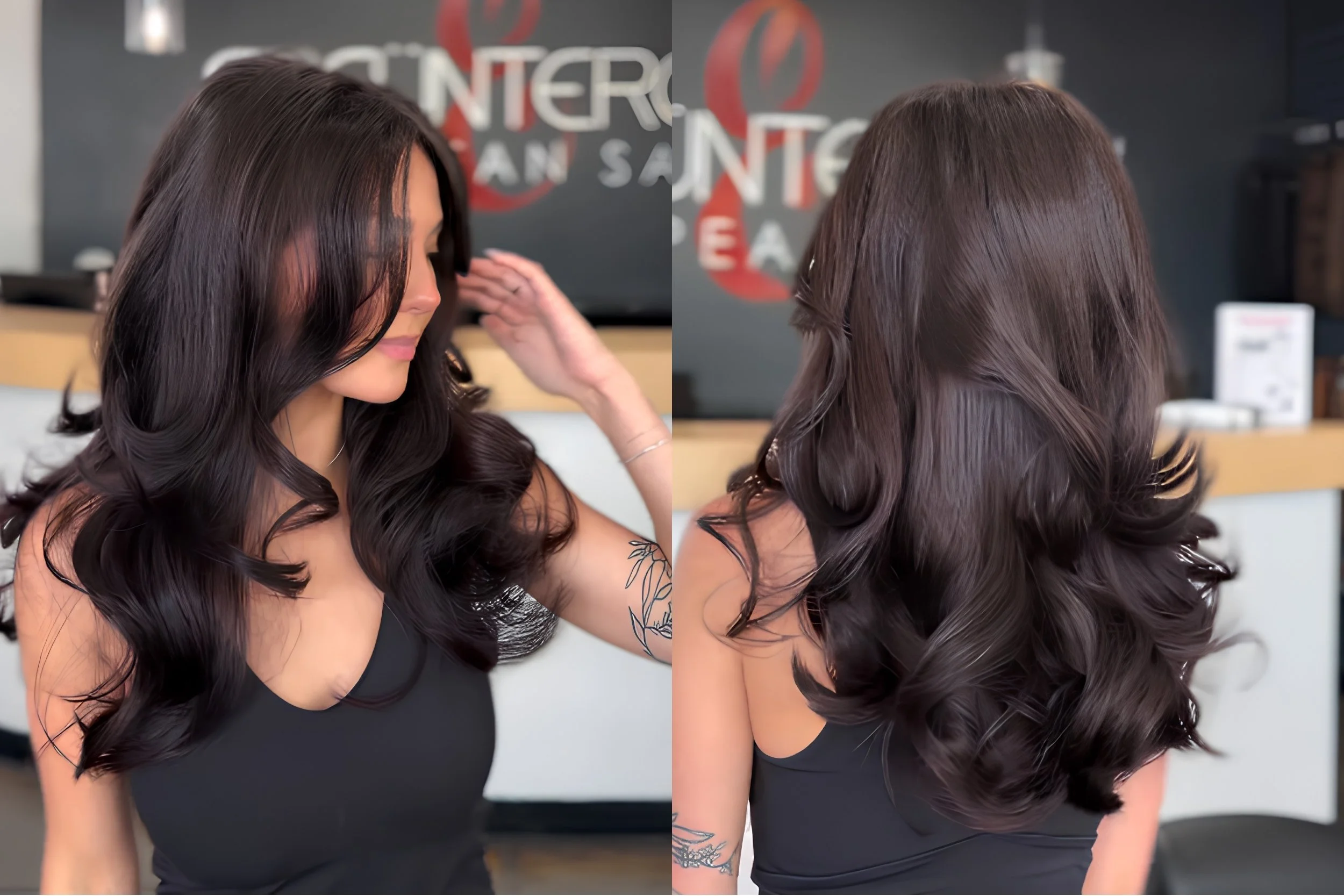
Thick and coarse hair carries significant visual and physical weight, which means the primary goal of a cut for this texture is almost always weight management and shape control rather than volume creation. Without strategic weight removal, thick hair tends to expand outward and sit heavily rather than falling into a defined shape.
Coarse hair is also more resistant to bending around the face, which means cuts that rely on the hair naturally curving inward may not behave that way on a coarser texture. The cut needs to account for how the hair physically behaves at that specific density and coarseness rather than assuming it will behave like the reference photo.
What to Ask For
Ask for layering that removes internal weight rather than just texturizing the ends. The goal is to reduce the bulk that causes the hair to expand, not simply to create movement at the surface. Point cutting or slide cutting through the interior of the hair achieves this in a way that standard horizontal layers often do not on thicker textures.
Ask your stylist to address the perimeter specifically. On thick hair the ends can become very heavy and solid-looking if they are not shaped with some graduation. A slightly beveled or graduated perimeter allows the ends to move rather than sitting as a dense, heavy block at the bottom of the cut.
What to Avoid
Avoid adding significant length without addressing internal weight at the same time. Very long, very thick hair without weight removal becomes progressively harder to manage and more prone to the expansion and triangle shape that is the primary complaint of most thick-haired clients.
Avoid heavy blunt bangs unless the texture is specifically suited to them. Thick, coarse hair in a blunt fringe can become dense and push outward rather than laying flat, which requires significant daily management to control. A softer side-swept fringe or curtain bang tends to adapt better to this texture's natural tendencies.
How to Have the Consultation That Gets You the Right Cut
The consultation is where the cut is decided, not when the scissors start. Everything that follows is execution, and execution can only be as good as the information that informed it.
Come in with your hair in its natural state if possible. If you cannot, describe your natural texture specifically. Where does it get heavy or flat. What does it do at the roots versus the ends. Where does frizz concentrate. How does it behave on a humid day versus a dry one. These details tell a stylist things that a photo cannot.
Describe your actual morning routine, not your aspirational one. How much time you spend on your hair, whether you use heat tools, how much product you use and what kind. A cut built for someone who spends twenty minutes styling every morning is not going to function for someone who spends five. Pretending otherwise only sets up the next haircut disappointment.
Tell your stylist about what has not worked before. Not just that a previous cut felt wrong, but specifically what it did that you did not want. Where it expanded. Where it went flat. When it stopped looking right. That information is more useful to an experienced stylist than a reference photo because it tells them exactly what to avoid rather than simply where to aim.
Every haircut appointment at Ergun Tercan Salon includes a consultation before anything is cut. The stylists work across all textures, from fine and straight to coarse and tightly curled, and the consultation is treated as the part of the appointment where the real decisions are made. If you want to understand how that approach applies specifically to curly hair, the guide to the best haircuts for naturally curly hair goes deeper on the curly-specific details that make the most difference.
How Denver's Climate Affects Your Haircut Between Appointments
Denver's low humidity and high altitude pull moisture from hair faster than most climates. This affects every texture but shows up differently depending on the hair.
Curly and wavy textures lose definition faster in dry air because moisture is what activates and holds the curl or wave pattern. A cut that held its shape for three days after washing in a more humid city may only hold for one in Denver. This is worth mentioning at the consultation, particularly if you have recently moved and are finding that what used to work is no longer working the same way here.
Fine hair in Denver can start to look limp and flat sooner than expected because the strands are losing moisture and the subtle body that keeps them appearing present disappears faster in dry air. A cut that accounts for this, combined with a lightweight hydrating routine between washes, makes a noticeable difference in how long the cut holds its shape.
Thick and coarse hair in Denver can develop frizz at a rate that surprises clients who did not experience it in more humid climates. The dry air increases the porosity of coarse strands over time, which creates surface frizz even on hair that was previously smooth. A keratin smoothing treatment is one of the most effective tools for managing this specifically in Denver, paired with a cut that works with the texture's natural behavior rather than trying to suppress it.
A Cut That Works Is One You Stop Thinking About
That is the actual goal. Not a cut that looks perfect walking out of the salon with professional styling. A cut that looks wearable on a regular morning with the time and effort you actually have.
Getting there is almost entirely a function of having the right conversation before the cut starts. The texture, the lifestyle, what has not worked before, and what you are genuinely willing to do at home each day. A stylist who has that information can build something that functions. One who does not is guessing. If you are ready to have that conversation, book a haircut consultation at Ergun Tercan Salon in Denver.
Frequently Asked Questions About Haircuts for Different Hair Textures
What is the best haircut for curly hair?
There is no single best cut for curly hair because curl patterns vary significantly from loose waves to tight coils, and each responds differently to layering and weight removal. In general, curly hair benefits from layering that allows the curl to spring rather than pile up, and from being cut dry so the stylist can see where each curl falls in its natural state. Blunt one-length cuts almost always cause curly hair to expand outward rather than fall into a defined shape.
What is the best haircut for fine hair?
Fine hair typically does best with cuts that preserve weight at the perimeter rather than removing it. A blunt or lightly graduated perimeter creates the visual impression of density because the ends are all present together rather than thinning out. Heavy interior layering tends to make fine hair look thinner rather than lighter. In Denver specifically, fine hair benefits from a cut calibrated to the dry climate, which pulls moisture from fine strands faster than most other environments.
Should curly hair be cut wet or dry?
Dry in most cases. Curly hair shrinks significantly as it dries, sometimes by several inches depending on the curl pattern. A stylist cutting wet is making decisions about a length that will not exist once the hair dries, which is one of the most common causes of curly haircuts ending up shorter than expected. The final shaping should always account for how the curl sits in its dry state.
Why does my haircut look good at the salon but not at home?
The most common reason is that the cut was designed to look good styled rather than in the hair's natural state. A cut that requires heat or product to function is not a cut working with your texture. A texture-appropriate cut should look wearable with minimal effort when it dries naturally. If a cut consistently falls apart at home, the approach rather than the hair is almost always the issue.
How does Denver's climate affect how my haircut looks between appointments?
Denver's low humidity and high altitude pull moisture from hair faster than most climates. Curly and wavy textures lose definition more quickly here, fine hair loses body and goes flat faster, and coarse hair can develop frizz not present in more humid environments. Mentioning Denver's climate and how your specific hair has been behaving here gives your stylist context that directly affects how they approach the cut.
How often should I get a haircut to keep my texture looking right?
Shorter precision cuts typically need attention every four to six weeks before they lose their shape. Longer textured cuts can go six to eight weeks if they were built with the grow-out in mind. Curly hair often needs less frequent trimming because the curl pattern absorbs minor irregularities as it grows. Fine hair tends to need the more frequent end of the range because it loses visible structure faster as it grows out.
What should I tell my stylist to get a haircut that works with my texture?
Describe what your hair does when it dries completely without product or heat. Tell your stylist where it gets heavy, where it goes flat, and where frizz concentrates. Describe your actual morning routine and how much time you spend on your hair. Tell them what has not worked about previous cuts specifically. That information, combined with seeing the hair in its natural state, gives an experienced stylist everything needed to build a cut that actually functions.
Related Reads
If This Got You Thinking, These Are Worth Reading Next