
What Keratin Smoothing Actually Does to Your Hair (And Who It's Not For)
The Honest Guide to Keratin Smoothing: What It Does, What It Does Not, and Who Should Skip It
Keratin smoothing is a treatment that deposits a protein layer around each hair strand, seals the cuticle, and reduces frizz while improving shine and manageability. It does not permanently straighten the hair and it does not change the hair's internal structure the way a chemical relaxer does. Results last up to twelve weeks depending on hair type and aftercare. It works differently on curly, wavy, and straight hair, and it is not the right choice for everyone. This guide explains exactly what it does, what it does not do, and the situations where it is not the right fit.
What Keratin Smoothing Actually Is Before the Marketing Version
Most descriptions of keratin smoothing focus on what it gives you: smoother hair, less frizz, faster mornings. That is all accurate. What tends to get less attention is how it actually works, and understanding the mechanism is what makes it possible to have a realistic expectation of the result rather than a disappointing one.
Keratin is a protein that makes up the structure of hair naturally. Over time, with heat, chemical processing, sun exposure, and environmental factors, that protein degrades. The hair becomes more porous, more prone to frizz, and less responsive to styling. A keratin smoothing treatment replenishes that protein layer from the outside rather than from within, coating the strand and sealing the cuticle so the hair behaves more smoothly and predictably.
The Pure Brazilian Keratin Treatment used at Ergun Tercan Salon combines Brazilian keratin with acai, cocoa butter, and essential amino acids. The formula reconstructs and improves the hair shaft rather than simply coating the surface, which is the distinction between a treatment that genuinely strengthens the hair and one that only temporarily changes how it looks.
What Actually Happens to Your Hair During the Treatment
How the Treatment Works
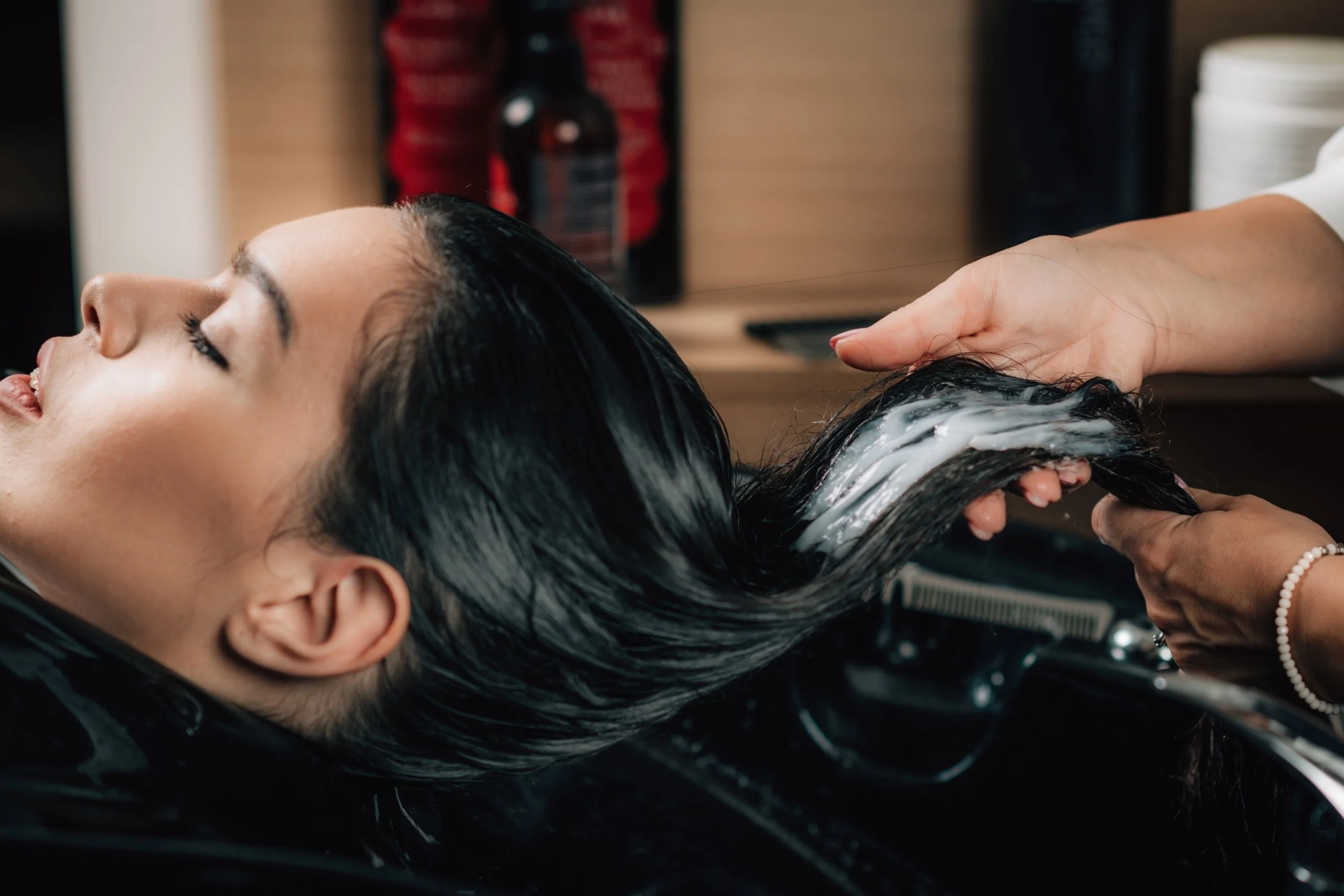
The treatment is heat-activated. The smoothing solution is applied to clean hair and then sealed into the strand using a flat iron at a controlled temperature. The heat activates the keratin and amino acids and drives the formula into the cuticle layer, where it bonds and creates the protective protein coating. This is not the same process as a chemical relaxer, which breaks and reforms bonds inside the hair. Keratin smoothing works on the outside of the strand rather than inside it.
The full appointment at Ergun Tercan Salon takes ninety minutes. Unlike some older keratin formulas that required clients to avoid washing or styling for several days after the treatment, the Pure Brazilian system delivers results immediately. The hair can be washed, styled, and worn normally the same day.
What the Hair Looks and Feels Like Immediately After
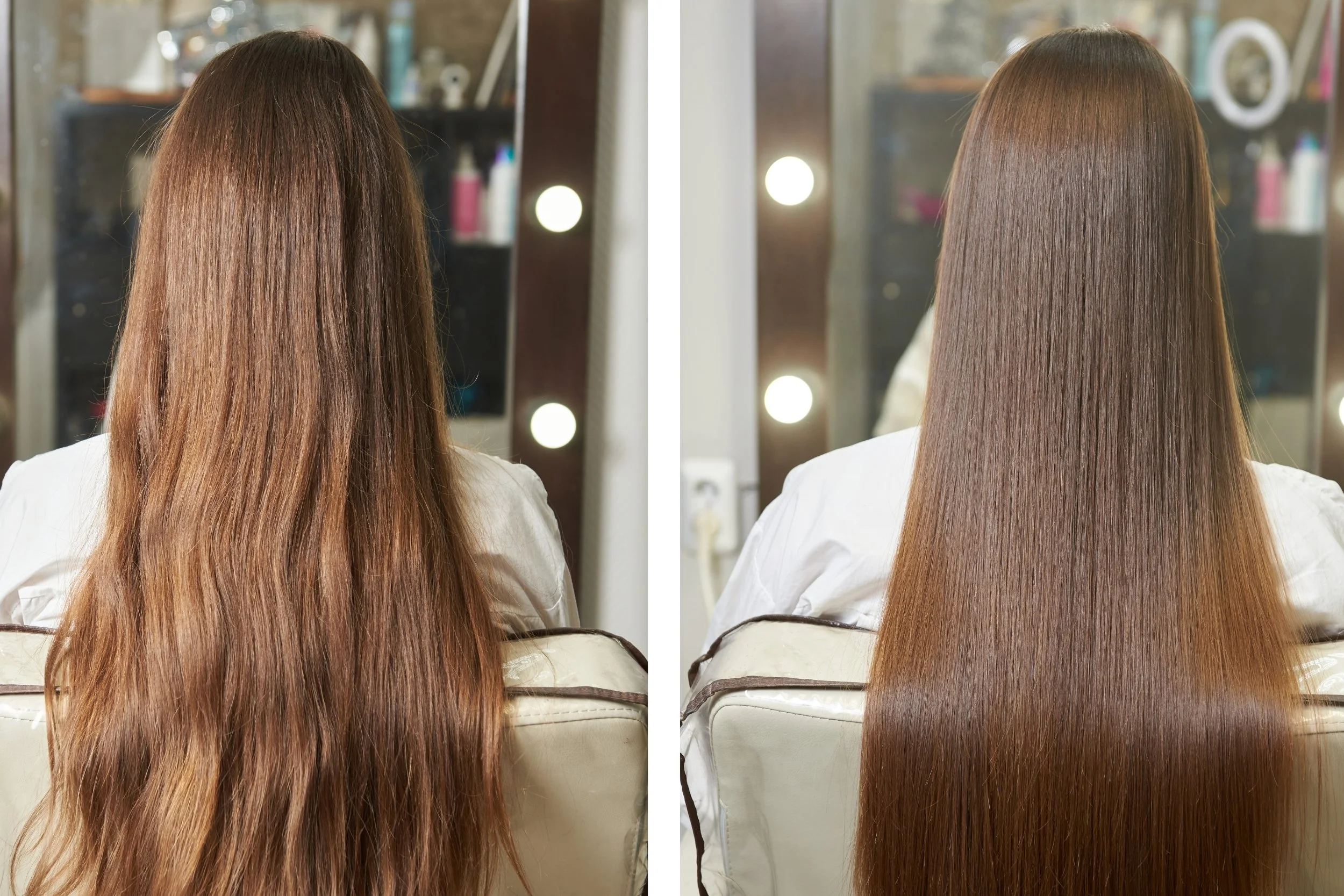
Most clients notice the difference the moment the flat iron passes through their hair. The strand becomes visibly smoother and reflects light more evenly, which is the characteristic shine associated with a keratin result. The hair feels softer and moves more fluidly.
For clients with curly or wavy hair, the change is more dramatic because the starting point involves more texture for the treatment to work with. For clients with straight hair that has been dealing with frizz or dryness, the result reads as a refinement rather than a transformation. The hair looks like the best version of what it already is rather than a different type of hair entirely.
How Keratin Smoothing Affects Different Hair Types
Curly Hair
Curly hair sees some of the most visible results from keratin smoothing because the treatment addresses the frizz and porosity that are most pronounced in tightly textured hair. The curl pattern does not disappear. What changes is the frizz that surrounds the curl, the difficulty of styling it, and the inconsistency of the curl's behavior day to day. Curls become more defined, more uniform, and significantly easier to manage.
The degree of change depends on the specific curl pattern, the density of the hair, and how the treatment is applied. A tighter, denser curl will see more change than a loose wave pattern starting from a lower frizz point. The curl itself is retained, which is the key difference between keratin smoothing and a chemical straightener.
Wavy Hair
Wavy hair has flexibility in the result. Depending on how the treatment is applied and how the hair is styled immediately after, the outcome can preserve the wave pattern in a smoother, more controlled version or move the hair toward a straighter result. This is one of the conversations worth having specifically at the consultation, because the stylist's approach during the flat iron step directly affects which direction the result goes.
For wavy hair clients dealing with humidity-related frizz, which is not a Denver-specific issue but is relevant for anyone traveling to or from more humid climates, keratin smoothing is particularly effective because the sealed cuticle resists the moisture absorption that causes frizz to form.
Straight Hair
Straight hair that has been dealing with frizz, dryness, or a lack of shine benefits from keratin smoothing in a quieter but equally meaningful way. The treatment does not add volume or change the weight of the hair, but it does add a refinement to the surface that makes the hair look polished and healthy rather than flat and dull.
For straight hair that has been heavily color-processed or heat-damaged, the protein reconstruction component of the treatment is particularly relevant. The amino acids in the formula work to rebuild the compromised areas of the hair shaft, which improves both the appearance and the overall integrity of the hair over time.
Fine Hair
Fine hair requires some additional consideration before keratin smoothing is applied. The treatment adds a coating to the strand, which for very fine, low-density hair can sometimes make the hair feel heavier or slightly less voluminous than before. This is not a universal outcome and it depends significantly on how much product is used and how it is distributed, but it is worth discussing at the consultation for clients whose primary concern is volume rather than frizz.
Fine hair that frizzes or loses shape quickly in dry or humid conditions tends to respond well to keratin smoothing. Fine hair that already lies flat and primarily needs body is a situation where the treatment deserves a careful conversation before proceeding.
Thick or Coarse Hair
Thick and coarse hair typically sees some of the most dramatic and long-lasting results from keratin smoothing. The treatment reduces the volume of frizz, softens the coarseness of the strand's texture, and makes the hair significantly more manageable without flattening it. Styling time reduction is most pronounced for clients with thick or coarse hair because this texture typically requires the most daily effort to control.
How Long It Actually Lasts and What Affects the Timeline
The Pure Brazilian Keratin Treatment lasts up to twelve weeks. That is the ceiling under ideal conditions, not the guaranteed minimum. Several factors affect where in that range your result lands
Wash frequency is the single biggest variable. Every shampoo cycle gradually removes the keratin coating from the strand. Clients who wash daily will see their results fade closer to the six-week mark. Clients who wash two to three times a week typically enjoy results that hold closer to the full twelve weeks. This is one of the most actionable things a client can do to extend their treatment, and it costs nothing beyond the habit adjustment. The guide on overwashing hair covers the practical strategies for reducing wash frequency without sacrificing how clean the hair feels.
Sulfate-free shampoo is essential after a keratin treatment. Sulfates are aggressive detergents that strip the keratin coating significantly faster than sulfate-free formulas do. Using a regular sulfate-containing shampoo after the treatment is one of the fastest ways to cut the result's lifespan in half. This is not a recommendation that varies by stylist or brand. It is consistent across every professional keratin system.
Saltwater and chlorine also degrade keratin coatings faster than fresh water does. Clients who swim regularly during the twelve-week window will see results fade earlier than clients who do not. A leave-in conditioner or protective oil applied before swimming creates a barrier that reduces but does not eliminate that degradation.
What Keratin Smoothing Is Not
It Is Not a Chemical Straightener
This is the most important distinction and the one most frequently misunderstood. A chemical relaxer or Japanese straightening treatment breaks the disulfide bonds inside the hair shaft and reforms them in a straighter configuration. The change is permanent until the hair grows out and it fundamentally alters the hair's internal structure.
Keratin smoothing works on the outside of the strand. It deposits a protein coating and seals the cuticle. The hair's internal structure is unchanged. This is why keratin results fade over time rather than growing out as a hard line, and why the curl or wave pattern returns gradually as the treatment washes out rather than all at once.
It Is Not a Permanent Treatment
Twelve weeks is the maximum result, not a starting point. Clients who arrive expecting a permanent change are going to be disappointed, and that disappointment is the result of an expectation gap rather than a treatment failure. The treatment needs to be repeated to maintain the result, and most clients who find it worth doing find the maintenance schedule of two to three times per year genuinely manageable.
It Is Not the Same as All Keratin Products
Keratin is an ingredient, not a category. There are hundreds of products marketed as keratin treatments that range from professional-grade salon formulas to retail conditioning masks with minimal keratin content. The results vary enormously across this spectrum. A professional keratin smoothing treatment applied by a trained stylist with a heat-activated formula is a fundamentally different service than a keratin-containing conditioner used at home. The comparison that matters is between specific formulas applied by trained professionals, not between any two products that both have keratin in the name.
Who Keratin Smoothing Works Best For
Keratin smoothing is genuinely useful for clients whose primary hair complaints fall into one or more of the following categories. Hair that frizzes in humidity, dry air, or wind. Hair that takes a long time to style each morning because of texture or volume that needs managing. Hair that has been color-treated or heat-damaged and feels dry, rough, or dull. Hair that grows out of the shower looking unpredictable and requires significant product to achieve a consistent result.
Clients with any texture, from tightly curled to pin-straight, can benefit from the treatment when the issue is frizz, dryness, or manageability. The specific result differs by texture, but the underlying mechanism addresses the same root problem across all of them.
Clients who travel frequently or have limited time for daily styling tend to see a particularly meaningful quality-of-life improvement after the treatment, because the reduction in styling time is cumulative. If the treatment saves twenty minutes every morning, that is roughly forty hours returned over the course of the twelve-week result period.
Who Keratin Smoothing Is Not Right For
Pregnant or Nursing Clients
Out of an abundance of caution, most professional guidelines recommend that pregnant or nursing clients postpone keratin treatments. Even formaldehyde-free formulas involve heat activation and chemical ingredients that are best avoided during pregnancy. This is a conversation worth having with your doctor rather than a decision made at the salon, but it is standard practice at professional salons to decline keratin services for clients who are pregnant.
Hair That Is Already Severely Over-Processed
Hair that has been pushed past its structural limits through repeated bleaching, overlapping chemical services, or significant heat damage may not be in the right condition to receive a keratin treatment. The heat activation step requires the hair to be structurally intact enough to handle the flat iron pass. Hair that is already breaking, extremely porous, or severely compromised needs a period of stabilization and protein repair before a keratin treatment is the appropriate next step.
At Ergun Tercan Salon, the consultation before any keratin appointment includes a real assessment of the hair's current condition. If the hair is not in the right place for the treatment, that conversation happens before the appointment proceeds rather than after. Honesty at that point protects both the hair and the client's investment. If you have ever wondered whether past salon services may have compromised your hair's condition, the guide on signs your stylist is damaging your hair covers the specific indicators worth knowing before any chemical service.
Very Fine or Low-Density Hair Where Volume Is the Primary Goal
As mentioned earlier, fine hair that is primarily looking for more body or volume may not find keratin smoothing the right answer. The treatment's primary function is to reduce frizz and improve manageability, not to add lift or density. A client with fine, flat hair who is hoping the treatment will add volume is likely to be disappointed, and a consultation that surfaces this early saves everyone the frustration of the wrong expectation.
Clients Expecting Permanent Results
If the goal is a permanent change to the hair's texture, keratin smoothing is not the right service. A client who wants their curl pattern gone permanently, or who does not want to maintain a treatment every three months to keep the result, is better served by a different conversation about what is actually available and what the long-term commitment of each option looks like.
What to Do Before Your Appointment
Arrive with clean hair. The treatment is applied to freshly washed hair so the formula can penetrate without any product residue creating a barrier between the keratin and the strand. Do not apply any styling products between washing and your appointment.
If you have had a recent chemical service, disclose this at the consultation. Color applied in the two weeks before a keratin treatment, perms, relaxers, or any other chemical service affects how the hair responds to the treatment and how the stylist should approach the application. This is not information that delays the appointment in most cases, but it is information that changes how it is done.
Bring your usual styling products to the consultation or at least be prepared to describe what you use at home. Your stylist will recommend specific post-treatment products, and knowing what you are already working with helps them make recommendations that fit your routine rather than requiring you to start from scratch.
How Denver's Dry Climate Makes Keratin Smoothing More Relevant Than Most Places
Colorado is one of the driest states in the country, and Denver's combination of low humidity and high altitude creates hair conditions that most people do not anticipate when they move here. Hair that behaved predictably in a more humid city starts frizzing, losing luster, and becoming harder to manage in ways that seem to appear out of nowhere.
What is actually happening is that the dry air is pulling moisture from the hair shaft faster than it can be replaced through normal conditioning routines. The cuticle lifts in response to the moisture loss, which creates frizz at the surface and dullness in the overall appearance. Keratin smoothing addresses this directly by sealing the cuticle closed and creating a protective coating that resists the moisture-stripping effect of dry air.
This is also why the keratin treatment's effect on color-treated hair is particularly noticeable in Denver. The Pure Brazilian Keratin Treatment restores vibrancy to color that has been dulled by dry air and UV exposure, making highlights and color appear more saturated and alive in the weeks following the treatment. For clients managing a balayage or color and highlights service through Denver's climate, a keratin treatment timed after the color appointment is one of the most effective ways to extend both the color's vibrancy and the hair's overall condition.
Whether It Is Worth It Depends on What You Are Trying to Solve
For clients whose daily hair frustrations are primarily frizz, dryness, inconsistent texture, or a morning routine that takes longer than it should, the answer is almost always yes. The improvement in manageability, the reduction in styling time, and the condition improvement in the hair itself tend to deliver a return on the investment that most clients find compelling enough to repeat.
For clients whose primary goals are volume, length, or a permanent texture change, the treatment is not the right fit and the consultation should surface that honestly before any service is booked. That honesty is not a lost sale. It is the difference between a client who leaves satisfied and one who leaves disappointed.
If you are not sure whether keratin smoothing makes sense for your hair specifically, the most useful starting point is a consultation where your hair's actual condition, texture, and goals can be assessed in person. You can book a keratin consultation at Ergun Tercan Salon in Denver and walk away with a clear picture of what the treatment would and would not do for your specific hair before committing to the appointment.
Frequently Asked Questions About Keratin Smoothing Treatments
What does a keratin smoothing treatment actually do to your hair?
A keratin smoothing treatment deposits a protein layer around each hair strand and seals the cuticle using heat activation. This reduces frizz, improves shine, and makes the hair more manageable and consistent in its behavior. It does not permanently alter the hair's internal structure the way a chemical relaxer does. The result fades gradually over time as the keratin coating washes out, typically over eight to twelve weeks.
Does keratin smoothing work on curly hair?
Yes. Keratin smoothing reduces the frizz and porosity associated with curly hair without eliminating the curl pattern entirely. Curls become more defined, more uniform, and significantly easier to manage after the treatment. The degree of change depends on the curl pattern, density, and how the treatment is applied. Clients who want to retain their curl pattern should communicate this clearly at the consultation so the stylist can calibrate the application accordingly.
How long does a keratin smoothing treatment last?
Up to twelve weeks under optimal conditions. The actual duration depends on wash frequency, the shampoo formula used, whether the hair is regularly exposed to saltwater or chlorine, and how the hair was cared for in the weeks following the appointment. Clients who wash with sulfate-free shampoo two to three times a week typically see results closer to the full twelve-week window.
Who should not get a keratin smoothing treatment?
Pregnant or nursing clients are typically advised to wait. Clients with severely over-processed or structurally compromised hair may need a stabilization period before the treatment is appropriate. Clients with very fine, low-density hair who are primarily looking for volume rather than frizz control may not find keratin smoothing the right fit. And clients expecting a permanent result should understand clearly before booking that the treatment fades within twelve weeks.
Is keratin smoothing the same as a relaxer?
No. A relaxer breaks and reforms the bonds inside the hair shaft, creating a permanent change to the hair's internal structure. Keratin smoothing works on the outside of the strand, coating the cuticle with a protein layer that reduces frizz and improves manageability. The result is temporary rather than permanent and does not involve the same level of chemical processing as a relaxer.
What should I use to wash my hair after a keratin treatment?
Sulfate-free shampoo only. Sulfates are aggressive detergents that strip the keratin coating from the strand significantly faster than sulfate-free formulas do. Using a regular sulfate-containing shampoo after the treatment is one of the most common ways the result fades prematurely. Your stylist will recommend specific product options at the end of your appointment based on your hair type and the formula used.
Does keratin smoothing damage your hair?
A professionally applied keratin smoothing treatment using a quality formula does not damage the hair. The Pure Brazilian formula used at Ergun Tercan Salon reconstructs and improves the hair shaft using keratin, acai, cocoa butter, and essential amino acids, which strengthens the hair rather than compromising it. The treatment is not appropriate for hair that is already severely damaged, and the consultation before the service includes an assessment of the hair's current condition to make sure it is a suitable candidate.
Can I get a keratin treatment if my hair is color-treated?
Yes, and in many cases color-treated hair benefits significantly from the treatment. The keratin coating helps preserve color vibrancy by sealing the cuticle, which reduces the color fade that occurs when the cuticle is open and porous. In Denver's dry climate specifically, the combination of color and keratin smoothing is one of the most effective ways to keep color looking saturated and healthy between salon appointments. The treatment should be scheduled after the color service rather than before it
Related Reads
If This Got You Thinking, These Are Worth Reading Next