
Blonde to Brunette: How to Go Darker Without Flat or Muddy Color
Going Darker Is Not as Simple as Adding Brown
Every fall, more blondes start asking about going brunette. Some are tired of the toning appointments, some want a change for the season, and some simply miss their natural depth. The assumption is that going darker is the easy direction: no bleach, no lifting, just put brown over the blonde. In practice, this is the transformation that most often goes wrong. Dark color applied straight onto lightened hair can turn flat, muddy, hollow-looking, or even slightly green, and it can fade back toward blonde within a few weeks. This guide explains why that happens, what a colorist does differently to prevent it, which techniques keep the result rich and dimensional, and how long the transition realistically takes.
Why Blonde to Brunette Goes Wrong
Lightening Removes More Than Color
Natural hair color is made up of several layers of pigment. Dark hair carries warm red, orange, and gold tones underneath the brown. When hair is lightened, those warm pigments are lifted out, and that is how the hair reaches blonde in the first place.
That creates a problem when going back to brunette. A brown hair color is designed to sit on top of the warmth that natural hair still has. When it goes onto hair that no longer has that warmth, there is nothing underneath to support it. The brown has no foundation, so it reads as flat, cool, and hollow rather than rich.
Why Brown Can Turn Muddy or Green
Many brown formulas lean neutral or cool, and cool tones include blue and green. On natural hair, the remaining warmth balances those cool tones out. On pale, lightened blonde, there is nothing to balance them, so the result can look murky, khaki, gray-brown, or slightly green, especially in daylight. This is the "muddy" result most people describe when a blonde to brunette color goes wrong.
Why Dark Color Fades Fast on Lightened Hair
Lightened hair is more porous than unprocessed hair. It absorbs color quickly, but it also lets it go quickly. A brunette applied to porous blonde can look right on the day and start fading toward a washed-out, uneven brown within a few weeks. The ends, which are usually the most processed, tend to fade first, which can leave the color looking darker at the root and patchy toward the ends. The guide to why hair color fades explains porosity and fading in more detail.
Why the Result Can Look Uneven
Most blondes do not have one even level of blonde. There are highlights, balayage, older lightened ends, and newer regrowth, and each area takes dark color differently. Without a plan for those differences, the new brunette can show bands, a darker root, a lighter or grayer mid-length, and ends that grab too much color.
The Step That Makes the Difference: Pre-Pigmentation
The main tool a colorist uses to prevent flat or muddy brunette is a pre-pigmentation step, often called a "fill." Before the brown goes on, the colorist puts back the warm tones that lightening removed, usually a red, copper, or gold shade chosen to match the brunette you are going toward.
The fill gives the brown something to hold on to. Instead of sitting on top of empty, pale hair, the brunette now has a warm foundation underneath it, the way it would on natural hair. The result looks richer, lasts longer, and is far less likely to turn green, gray, or hollow.
The fill does not mean you will end up red. It sits underneath the final color and is covered by the brunette. What you see is a brown that looks like it has depth and warmth inside it, not a red tone on the surface.
Not every client needs a fill. Hair with only light highlights, or blonde that is close to the target shade, may not. The more lightened and the paler the hair, the more important this step becomes, and a colorist will decide this based on your hair rather than as a fixed rule.
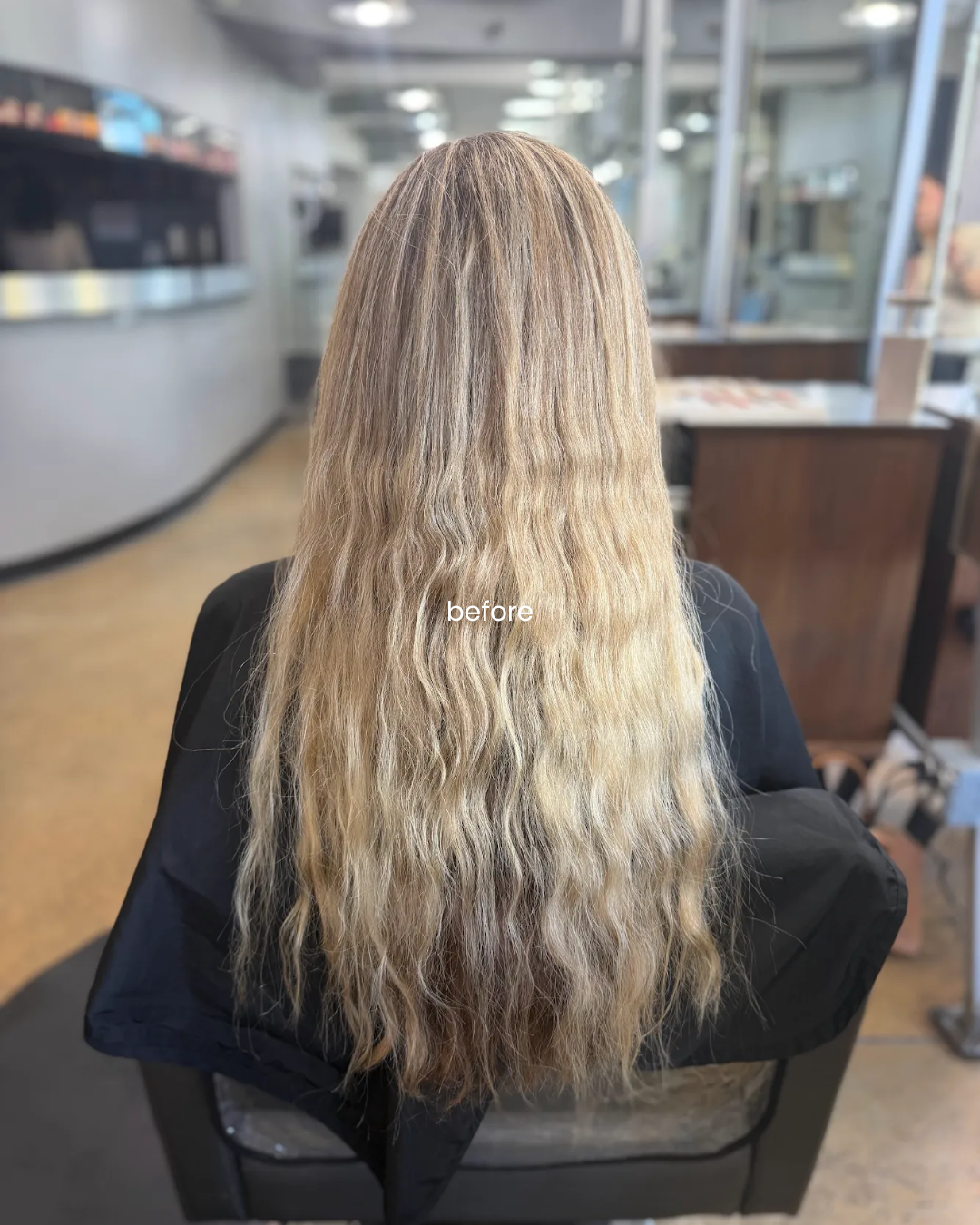
Techniques That Keep Brunette From Looking Flat
A single, uniform brown from root to tip is the most likely way to end up with flat color, especially on longer hair. Natural brunette is never one exact shade. These techniques add the variation that makes dark hair look rich.
Lowlights
Lowlights weave darker pieces through blonde hair rather than covering everything at once. They are often the first step for clients who want to go darker gradually, because they add depth while keeping some lightness. Over one or more appointments, more lowlights can be added until the overall look reads as brunette.
Root Shadow or Root Melt
A root shadow deepens the color at the scalp and blends it softly into the lengths. For blondes who want to go darker without a dramatic one-day change, it is a natural first step. It also grows out softly, which is why the root shadow guide calls it one of the most practical color techniques available.
Color Melt
A color melt blends two or more brunette shades together with no visible line, usually deeper at the root and slightly lighter through the ends. It is what gives brunette a glossy, multi-tonal finish. The espresso hair guide shows how a melt keeps even very dark brunette looking dimensional rather than flat.
Keeping a Few Lighter Pieces
Some clients do not want to lose all of their blonde. Leaving soft, lighter pieces around the face or through the ends keeps brightness near the face and makes the brunette look intentional rather than heavy. This is often a good option for clients with fair skin, where a fully dark result can feel severe.
Gloss to Finish
A gloss at the end of the appointment adds shine and fine-tunes the tone, warmer or cooler, so the brunette looks polished on the day. Glosses fade gradually rather than growing out with a line, and a gloss between appointments is one of the easiest ways to refresh a new brunette.
Choosing the Right Brunette for You
"Brunette" covers a wide range, and the right one depends on your skin tone, your eye color, and how dramatic you want the change to be.
Start a little lighter than you think. It is much easier to go darker at the next appointment than to lighten a brunette that turned out too dark. Dark color on porous hair can also come out deeper than expected.
Consider warmth. Warm brunettes, such as chocolate, chestnut, and caramel-brown, tend to look richer and less flat on previously blonde hair. The copper and cinnamon guide shows how much depth warmth can add.
Think about your skin tone. Olive and medium skin often suit deeper, richer brunettes. Fair skin usually looks best with soft, medium brunettes and a little lightness near the face. The guide to hair colors for olive, warm, and cool skin tones goes into this in more detail.
Bring photos. Two or three photos of brunette results you like, and one of something you do not, help your colorist understand the exact depth and tone you mean.
How Long the Transition Takes
Whether you can go from blonde to brunette in one appointment depends on how light your hair is now and how dark you want to go.
One appointment is often realistic if you have partial highlights or balayage and want a soft or medium brunette. Lowlights, a root shadow, or a fill and a melt can usually get you there in a single visit.
Two or more appointments are more common if your hair is very light, such as platinum or a full head of highlights, if you want a deep brunette, or if your ends are very damaged. Building depth in stages tends to give a more even, longer-lasting result than trying to cover everything at once.
It is also normal for a first brunette appointment to be followed by a gloss or a top-up a few weeks later. Very porous hair can lose some depth in the first few washes, and a quick refresh helps the color settle at the shade you wanted.
Caring for Your New Brunette
Wait before the first wash. Give the color a couple of days before shampooing, so it has time to settle.
Switch to sulfate-free, color-safe shampoo. Sulfates strip color, and new brunette on previously lightened hair is especially quick to fade.
Wash less often. Fewer washes mean less fading. Two to three washes a week is a realistic target for most people. The overwashing guide has practical tips for stretching the time between washes.
Use cooler water and heat protection. Hot water and high heat both speed up fading and dull shine.
Book a gloss between appointments. A gloss around six to eight weeks after your color refreshes depth and shine without a full color service.
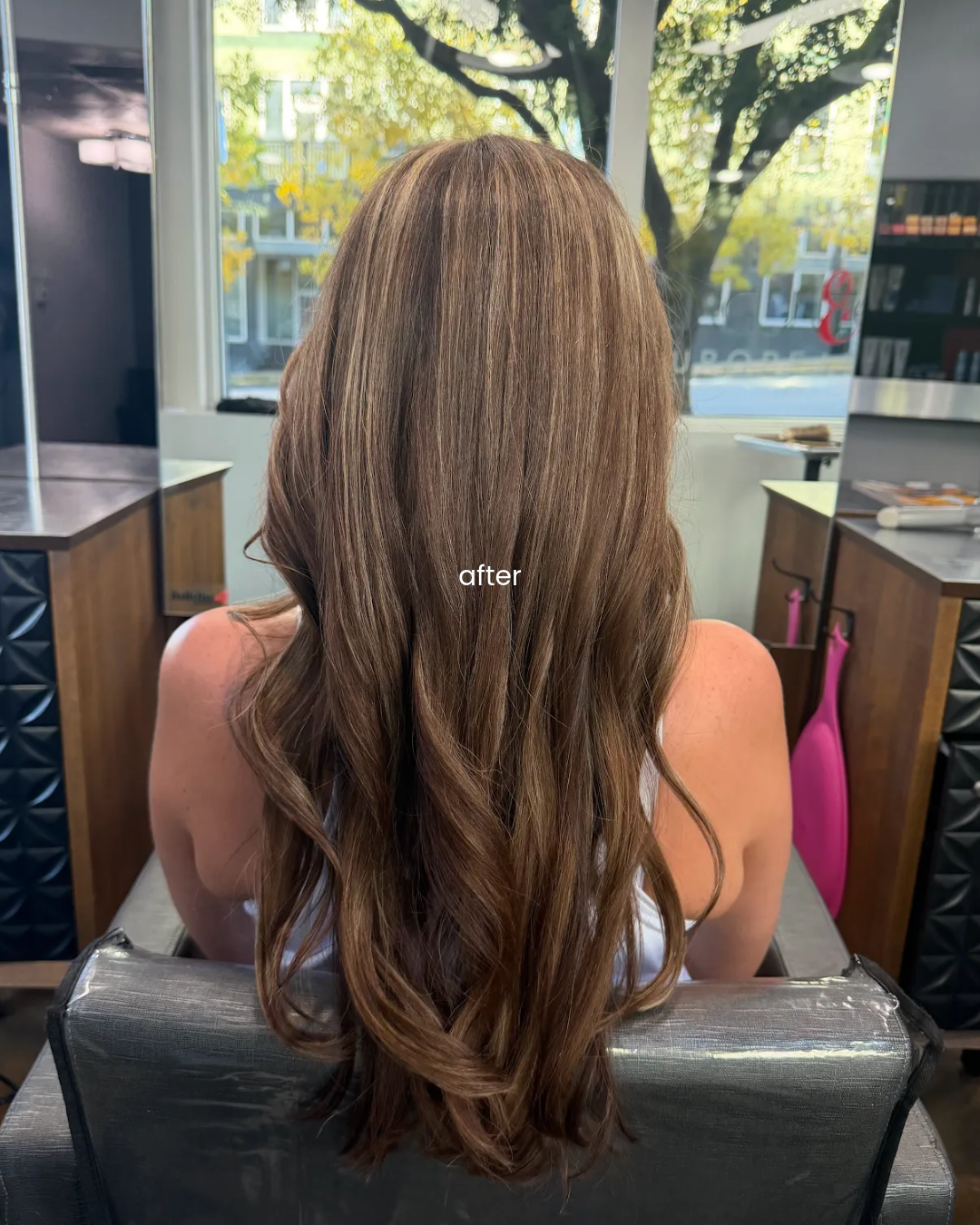
How Denver's Conditions Affect New Brunette
Denver's hard water leaves minerals on the hair that make dark color look dull and flat, and that dullness is easier to see on brunette than on blonde. A chelating or clarifying wash every four to six weeks removes that buildup. The hard water guide explains how to manage it.
Denver's altitude also means strong sun year-round, including in winter. UV exposure fades dark color and can pull it warmer, toward red or orange. A UV-protective leave-in before long days outside helps the brunette keep its tone.
The dry air adds one more factor. Previously lightened hair is already dry, and dry hair loses color faster. A regular conditioning treatment helps the hair hold onto its new brunette.
What to Ask at Your Consultation
"Do I need a fill first?" This is the most important question. Your colorist will look at how light and how porous your hair is and tell you whether a pre-pigmentation step is needed.
"Can we do this in one appointment, or will it take more?" Knowing the plan up front sets realistic expectations.
"How will you keep it from looking flat?" Ask which technique your colorist recommends, such as lowlights, a melt, or a root shadow, and why.
"What will it look like as it fades and grows out?" A good plan accounts for how the color will look in six weeks, not just on the day.
Be sure to share your full color history, including box dye, previous highlights, keratin treatments, or anything else your hair has been through. Each one affects how your hair will take dark color.
Rich, Dimensional Brunette Is All in the Plan
Going from blonde to brunette is one of the most satisfying color changes there is when it is done well. The difference between rich brunette and flat, muddy brown usually comes down to a few things: putting back the warmth lightening removed, building in dimension rather than one solid shade, and being realistic about how many appointments the change will take.
If you are ready to go darker this season, book a color consultation at Ergun Tercan Salon in Denver. Our colorists will look at your hair, talk through the right brunette for you, and build a plan that gets you there without the muddy middle stage. You can also explore our color and highlights services before your appointment.
Frequently Asked Questions About Going From Blonde to Brunette
Why did my hair turn muddy or green when I went from blonde to brunette?
Lightening removes the warm red, orange, and gold pigments that natural hair carries underneath the brown. Many brown formulas lean cool, and on pale blonde there is no warmth left to balance those cool tones, so the result can look murky, gray, or slightly green. A pre-pigmentation fill that puts warmth back before the brown goes on is the main way colorists prevent this.
What is a hair color fill?
A fill, or pre-pigmentation, is a step where the colorist applies a warm shade, usually red, copper, or gold, before the brunette. It replaces the warm pigment that lightening removed and gives the brown a foundation to hold on to. The fill sits underneath the final color, so it does not make the hair look red.
Can I go from blonde to brunette in one appointment?
Often, yes, if you have partial highlights or balayage and want a soft or medium brunette. If your hair is very light, such as platinum or full highlights, or you want a deep brunette, the change usually works better over two or more appointments. Your colorist will tell you which applies to your hair at the consultation.
Why does brunette fade so fast on previously blonde hair?
Lightened hair is more porous, which means it absorbs color quickly but also releases it quickly. Sulfate-free shampoo, fewer washes, cooler water, and a gloss between appointments all help the brunette last longer.
Should I use box dye to go brunette at home?
It is not recommended for previously lightened hair. Box dye has no fill step and applies one shade everywhere, which is the most common cause of flat, muddy, or uneven brunette. It can also make a later correction harder.
Will going brunette damage my hair?
Going darker is generally gentler than going lighter, because it does not require lifting the hair with bleach. The bigger concern is that lightened hair is already dry and porous. Conditioning treatments and gentle care at home help it stay healthy and hold the new color.
Can I go back to blonde later?
Yes, but going from brunette back to blonde means lightening the hair again, which takes time and is harder on the hair than going darker. If you think you may want blonde again soon, ask about lowlights or a root shadow, which keep some lightness and make the return easier.
Related Reads
If This Got You Thinking, These Are Worth Reading Next